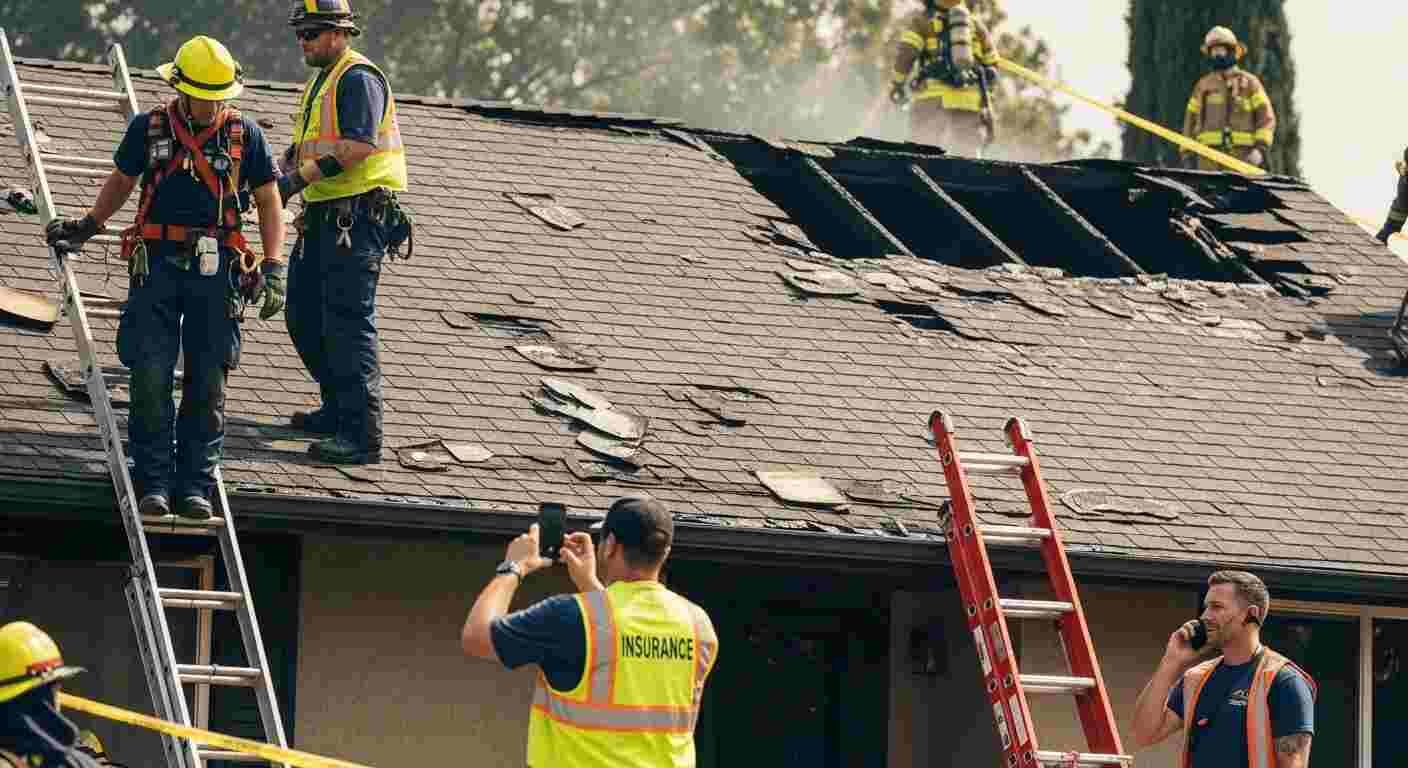

Emergency Actions After House Roof Fire Damage
The very first step is making sure everyone is safe. Do not re-enter the house until emergency services confirm it is safe. Even if the fire looks small, hidden damage can still be dangerous. Next, contact your insurance provider as soon as possible. After that, document the damage if it is safe to do so. Take clear photos from a distance. These steps help support claims and repair planning after roof fire damage.
First Steps After Roof Fire Damage for Homeowners
A roof fire can turn a normal day into a serious emergency. In those first moments after the fire is controlled, what you do next really matters. The right actions can reduce further damage and keep your home safer while you plan repairs. It’s important to stay calm and focus on safety first. Roof fire damage is not only about burned materials. It can also weaken the structure, create hidden risks, and leave smoke and soot inside the roof system.
Immediate Safety Precautions After Attic or Roof Fire
After an attic or roof fire, safety should always come first. Avoid walking under any visibly damaged ceiling areas. The structure may look stable but still be weak. In addition, cut off electricity if authorities advise it. This helps prevent electrical hazards. Also, keep people and pets away from the damaged zone until inspection is done. These early precautions are important after roof fire damage because hidden risks often remain even after flames are out.
- Do not re-enter the property until it is declared safe
After an attic or roof fire, the structure may look stable, but hidden damage can remain. Roof beams, ceilings, and insulation can weaken quickly. So, only go back inside when fire officials or inspectors confirm it is safe.
- Keep everyone away from the damaged area
Restrict access to the house or at least the affected section. Children, pets, and even adults should stay clear. This helps avoid accidents from falling debris or weakened ceilings.
- Switch off utilities if it is safe to do so
Electricity, gas, and water lines may be affected by heat or fire. If authorities allow, turn them off to reduce risk of shocks, leaks, or further hazards.
- Watch for structural instability signs
Look for sagging ceilings, cracked walls, or bent roof lines from a safe distance. These are warning signs that the structure may still be unstable after roof fire damage.
- Avoid touching soot or damaged materials immediately
Soot can contain harmful particles, and burned materials may be fragile. It is better to wait for professional cleanup before handling anything.
- Contact emergency services and insurance promptly
Report the incident as soon as possible. Quick reporting helps speed up inspections, claims, and emergency roofing response.
How to Prevent Further Structural Damage After Roof Fire
Once the fire is out, the structure may still be vulnerable. Water used in firefighting can weaken wood and insulation. So, quick action is needed to prevent further collapse or sagging.
If safe, temporary coverings like tarps can help protect exposed areas from rain. Moreover, avoid placing any extra weight on the roof or attic.
These steps reduce stress on the structure and limit worsening roof fire damage before repairs begin.
Temporary Solutions for Fire-Damaged Roof Before Full Repair
Temporary support is often needed after fire exposure. For example, tarps can cover open sections to block rain and debris. This helps protect the interior of the home. In some cases, temporary bracing is added to stabilize weakened beams. However, this should be done carefully and preferably by professionals.
These temporary measures do not fix roof fire damage. Instead, they help control the situation until full repair work starts.
How to Handle Smoke and Soot Damage in Roof Structure
Smoke and soot often spread far beyond the fire zone. They can settle into wood, insulation, and roofing layers. As a result, odor and contamination may remain even after visible cleaning.
Proper cleaning methods are needed. Dry soot should not be rubbed aggressively because it can spread further. Instead, specialized cleaning and deodorizing techniques are often required. Handling smoke damage correctly is an important part of managing roof fire damage long term.
Common Mistakes After Roof Fire Damage Homeowners Should Avoid
One common mistake is re-entering the home too early. This can be dangerous due to hidden structural weakness. Another mistake is trying to clean everything immediately without inspection. Also, many homeowners delay calling professionals. This can make roof fire damage worse over time. Moisture, soot, and structural issues can spread quickly.
Best Emergency Roofing Contractor After Fire Damage
Choosing the right contractor is very important after fire damage. Look for licensed professionals with emergency response experience. They should understand structural safety and fire-related roofing issues. In addition, check for availability of temporary stabilization services. A good contractor will act quickly and assess safety before starting repairs. Working with experts ensures roof fire damage is handled correctly from the beginning.
Cost of Immediate Roof Fire Damage Repair Services
The cost of emergency repair varies based on damage level. Small repairs may include tarping and minor support work. Larger damage may require structural reinforcement. Generally, costs increase if fire and water damage are both present. However, acting quickly can prevent even higher long-term expenses. So, timely action after roof fire damage can help control overall repair costs.
Difference Between Temporary vs Permanent Roof Fire Repair
Temporary repair focuses on safety and protection. It includes tarping, bracing, and basic stabilization. These steps stop further damage from happening. Permanent repair is more detailed. It involves rebuilding damaged sections, replacing materials, and restoring full structural strength. Both steps are important in roof fire damage recovery. However, temporary fixes only buy time, while permanent repairs restore the home fully.
| Aspect | Temporary Roof Fire Repair | Permanent Roof Fire Repair |
| Purpose | Provides immediate protection after fire damage | Restores full structural integrity of the roof |
| Durability | Short-term solution (days to weeks) | Long-term solution (years) |
| Materials Used | Tarps, plastic sheets, plywood, sealants | New roofing materials like shingles, metal sheets, or membranes |
| Cost | Low cost | Higher cost due to full restoration |
| Installation Time | Quick installation (few hours) | Takes longer (days to weeks) |
| Protection Level | Basic protection from weather and leaks | Full protection against fire, leaks, and structural damage |
| Goal | Prevent further damage until permanent repair | Restore roof to original or improved condition |
Final Thoughts
Roof fire damage is stressful, but the right steps can make recovery smoother. First, focus on safety. Then, stabilize the structure and prevent further damage.
Temporary measures help control the situation, but they are not the final solution. With proper inspection and professional repair, your roof can be restored safely and effectively over time.
FAQ – Roof Fire Damage
What areas to check first after roof fire damage?
First, inspect the attic, roof structure, and ceiling. These areas often hide hidden burn damage, weak beams, and smoke-affected insulation that may not be visible from outside.
Who should I call first after roof fire damage?
Start by contacting emergency services if the fire is active. After that, call a licensed fire damage restoration company and your insurance provider to begin the recovery process.
What to do immediately after roof fire damage?
Ensure everyone is safe and out of the structure. Next, avoid touching damaged areas and wait for official clearance before re-entering. Then document visible damage if it is safe to do so.
How to make your home safe after a roof fire incident?
Secure the damaged area, shut off utilities if needed, and prevent access to unstable sections. Professionals should then inspect and stabilize the structure before any repair work begins.
Can I stay inside my home after roof fire damage?
Usually no. Even if the fire is out, the structure may be unstable or unsafe due to heat damage, smoke, or weakened materials. Only re-enter after professionals confirm it is safe.
How to protect interior after roof fire damage?
Cover exposed areas with tarps or protective sheets if it is safe. Also, remove valuable items from affected zones and prevent water or weather exposure from causing further damage.