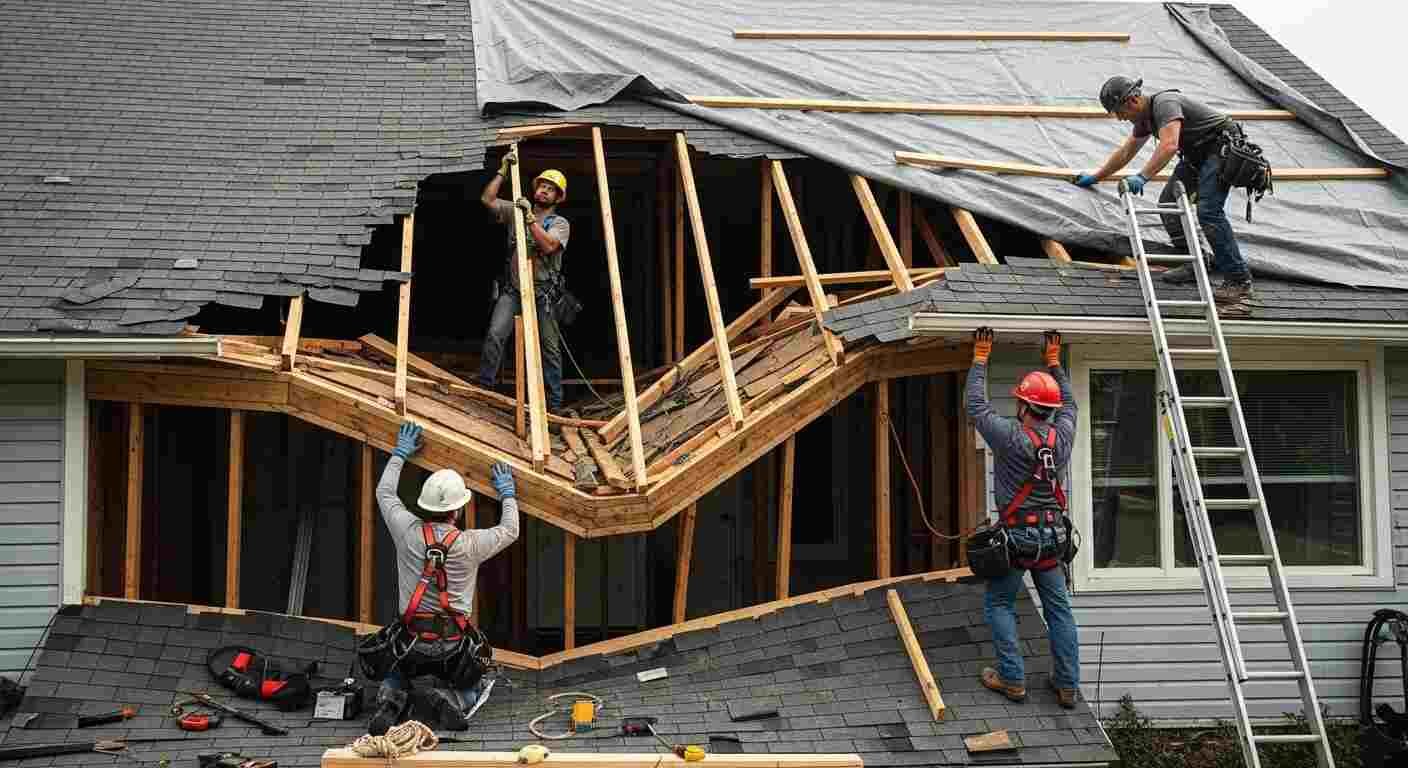

Temporary Fixes for a Sagging Roof Before Full Repair
A sagging roof can feel stressful. However, it does not always mean immediate collapse. In many cases, you can use temporary fixes for a sagging roof before full repair to reduce risk and keep your home safer.
These solutions are not permanent. Instead, they help control damage and slow down movement. Because of that, they give you time to plan proper repairs with a professional.
Temporary Roof Support Methods for Structural Sagging
Temporary support is often the first step. It helps spread weight away from weak areas. As a result, the roof stays more stable.
For example, builders may use extra beams in the attic. These beams hold the structure in place. In addition, diagonal bracing can stop further bending. Therefore, these temporary fixes for a sagging roof before full repair are useful for safety control. However, they do not solve the root problem. So, a full inspection is still needed.
Temporary Roof Support Methods for Structural Sagging
Here are practical temporary roof support methods for structural sagging that are commonly used to stabilize a weakened roof before full repair work begins:
- Adjustable Steel Lally Columns (Jack Posts)
- Timber Shoring Posts
- Ridge Beam Reinforcement
- Scaffolding Support System
- Diagonal Bracing with Lumber
- Load Redistribution with Temporary Joists
- Hydraulic Jack Lifting System
Adjustable Steel Lally Columns (Jack Posts)
These are strong vertical supports placed under sagging beams. They can be adjusted slowly to lift or hold the roof in position. They are widely used because they are stable, reusable, and can handle heavy loads when installed correctly.
Timber Shoring Posts
Wooden posts are a simple and cost-friendly option. They are cut to size and placed under the affected rafters or beams. While not as strong as steel, they work well for light to moderate sagging when installed tightly and evenly.
Ridge Beam Reinforcement
In this method, a temporary beam is added along the ridge line of the roof. It helps redistribute weight across the structure. As a result, pressure on the sagging section is reduced, which slows further deformation.
Scaffolding Support System
Scaffolding is sometimes used inside attics or exterior areas to hold roof sections in place.
It provides wide structural support and is especially useful for larger or more complex roof sagging issues.
Diagonal Bracing with Lumber
Wooden braces are installed diagonally between rafters and beams.
This prevents side movement and adds rigidity, helping the roof stay in its current shape until repairs are made.
Load Redistribution with Temporary Joists
Additional joists are installed alongside weakened ones to share the weight.
This method reduces stress on the original framing and helps stabilize the structure from within.
Hydraulic Jack Lifting System
Hydraulic jacks are used for controlled lifting of sagging sections.
The lift is done very slowly, and then permanent or semi-permanent supports are added to hold the position.
DIY Solutions for Minor Roof Sagging Problems
If the sagging is light, simple DIY steps may help. First, remove heavy storage from the attic. This reduces pressure on weak beams. Also, check for water leaks. Moisture can make wood weak over time. Moreover, fixing small leaks can slow down damage. Still, these temporary fixes for a sagging roof before full repair are only for minor cases. If the sag worsens, you should call an expert quickly.
- Clear Out Excess Weight from the Attic
- Check for Moisture or Leaks
- Add Temporary Timber Supports
- Reinforce Weak Joists with Bracing
Clear Out Excess Weight from the Attic
One of the easiest DIY solutions for minor roof sagging problems is removing extra load. Many people unknowingly store heavy boxes, old furniture, or tools in the attic. So, start by clearing unnecessary items. This reduces stress on beams and joists. As a result, the roof structure gets immediate relief without any construction work.
Check for Moisture or Leaks
Water is one of the main causes of sagging over time. Even a small leak can weaken wood and slowly bend the structure. Therefore, inspect the attic for damp spots, stains, or dripping water. If you find minor leaks, sealing them temporarily can help reduce further damage. In addition, better ventilation can also keep moisture levels under control.
Add Temporary Timber Supports
Another useful step in DIY solutions for minor roof sagging problems is placing wooden supports under weak areas. These can help reduce downward pressure on sagging sections. Cut sturdy timber pieces and fit them tightly under affected beams. However, make sure they are secure and evenly placed. Otherwise, uneven pressure may make the problem worse.
Reinforce Weak Joists with Bracing
If certain joists look weaker than others, you can reinforce them using simple diagonal or side bracing. This helps improve stability and limits movement in the roof frame. Moreover, it spreads the load more evenly across nearby structural members.
Using Jacks or Braces to Fix a Sagging Roof Temporarily
In some cases, roof jacks can support the structure. They lift the sagging area slowly. This must be done with care to avoid extra damage. After lifting, braces are added for support. They hold the roof in position. Consequently, the structure becomes more stable.
These temporary fixes for a sagging roof before full repair are helpful in emergencies. However, they need proper setup to stay safe.
Signs a Sagging Roof Needs Urgent Repair vs Temporary Fix
Not all sagging roofs are the same. Some are mild and slow. Others are serious and dangerous.
For example, small dips with no cracks may allow temporary support. In contrast, large bends or spreading cracks are serious warning signs. Also, water leaks and ceiling damage show urgency. Therefore, knowing when temporary fixes for a sagging roof before full repair are enough is very important. If signs are severe, do not delay repairs.
| Condition | Needs Urgent Repair | Temporary Fix |
| Structural integrity | Weak or damaged rafters | Structure still stable |
| Visible cracks | Large ceiling or wall cracks | Small hairline cracks |
| Shingle condition | Missing or severely damaged | Slightly worn or loose |
| Load impact | Heavy load causing sagging | Temporary weight issue |
| Safety risk | High risk of collapse | No immediate danger |
| Cost implication | Higher, long-term solution | Lower, short-term relief |
Cost-Effective Temporary Solutions for Sagging Roofs
Sometimes, budget is a concern. Fortunately, there are low-cost options. One simple step is removing extra weight from the attic.
Another option is using basic timber for support. It is cheap and easy to install. Moreover, it can reduce stress on weak points.
These temporary fixes for a sagging roof before full repair help you manage the issue without high cost. Still, they are not long-term solutions.
Emergency Steps to Take When Roof Starts Sagging
If sagging starts suddenly, act fast. First, stay away from the affected area. Safety should come first.
Next, reduce load in the attic. Also, stop using that space until checked. In addition, control any water leaks if possible. These temporary fixes for a sagging roof before full repair can slow damage in an emergency. However, professional help should follow quickly.
Temporary Fixes for Roof Dip in the Middle
A roof dip in the center is common. It usually means the middle beam is weak. So, support must be added underneath.
Vertical posts can help lift the dip slightly. Also, spreading weight to nearby beams improves balance. As a result, movement slows down.
These temporary fixes for a sagging roof before full repair help stabilize the middle area. Still, full repair is needed for long-term strength.
Roof Sagging Repair vs Temporary Stabilisation Methods
It is important to understand the difference here. Temporary stabilisation controls movement. Repair fixes the real damage.
For example, supports and braces are short-term tools. However, replacing damaged beams is a permanent solution. Moreover, both steps are often needed together.
So, temporary fixes for a sagging roof before full repair should always lead to proper repair work. One cannot replace the other.
Best Materials for Temporary Roof Support
Choosing the right material matters. Wood is the most common choice. It is strong and easy to install.
In addition, metal posts are very reliable. They can hold heavy loads safely. Plywood can also help spread weight.
These materials are often used in temporary fixes for a sagging roof before full repair. Because of this, they provide quick and practical support.
Final Thoughts
A sagging roof should never be ignored. However, it also does not always require panic. With the right temporary fixes for a sagging roof before full repair, you can reduce risk quickly.
Still, these solutions are short-term only. Therefore, always plan a full inspection and repair. In the end, proper repair is the only way to fully protect your home.
FAQ – Sagging Roof Temporary Fixes
Can a sagging roof be temporarily fixed without replacement?
Yes, minor sagging can often be stabilized temporarily. However, these are short-term measures only and do not replace proper structural repair or reinforcement.
Can a sagging roof be temporarily fixed without replacement?
Yes, minor sagging can often be stabilized temporarily. However, these are short-term measures only and do not replace proper structural repair or reinforcement.
How to support a sagging roof from inside the house?
You can support it by placing temporary posts or beams in the attic. These supports help reduce pressure on weak areas until a permanent fix is done.
Is it safe to stay in a house with a sagging roof?
It depends on severity. Light sagging may be safe for a short time, but significant bending, cracks, or movement can be dangerous. In such cases, avoid the area and seek help.
How much weight can a sagging roof hold before repair?
There is no fixed safe limit. Once sagging appears, the structure is already weakened, so any extra weight can increase risk and should be avoided.
How long can a temporary roof fix last?
Temporary fixes can last weeks to a few months, depending on conditions. However, they are not designed for long-term use and should be followed by proper repair quickly.
What causes roof sagging and short-term fixes?
Common causes include water damage, aging materials, poor construction, or excess attic load. Short-term fixes focus on reducing weight and adding temporary support.
Can adding support beams stop roof sagging temporarily?
Yes, adding beams or supports can stabilize the structure and slow further sagging. However, it does not correct the underlying damage.
How to prevent further damage in a sagging roof?
Remove extra attic weight, fix leaks, and add temporary supports. Also, avoid placing stress on the affected area until repairs are completed.
Can plywood or beams help support a sagging roof?
Yes, plywood can help distribute weight, and beams can provide added support. These are useful temporary solutions but should not replace permanent repair work.